Government
The neighbor at the check-in table: What it takes to run a Texas polling place
Early voting runs Oct. 19–30 at five Missouri City sites, where election clerks and judges are Fort Bend County residents who finished county training.
By Staff · October 20, 2026
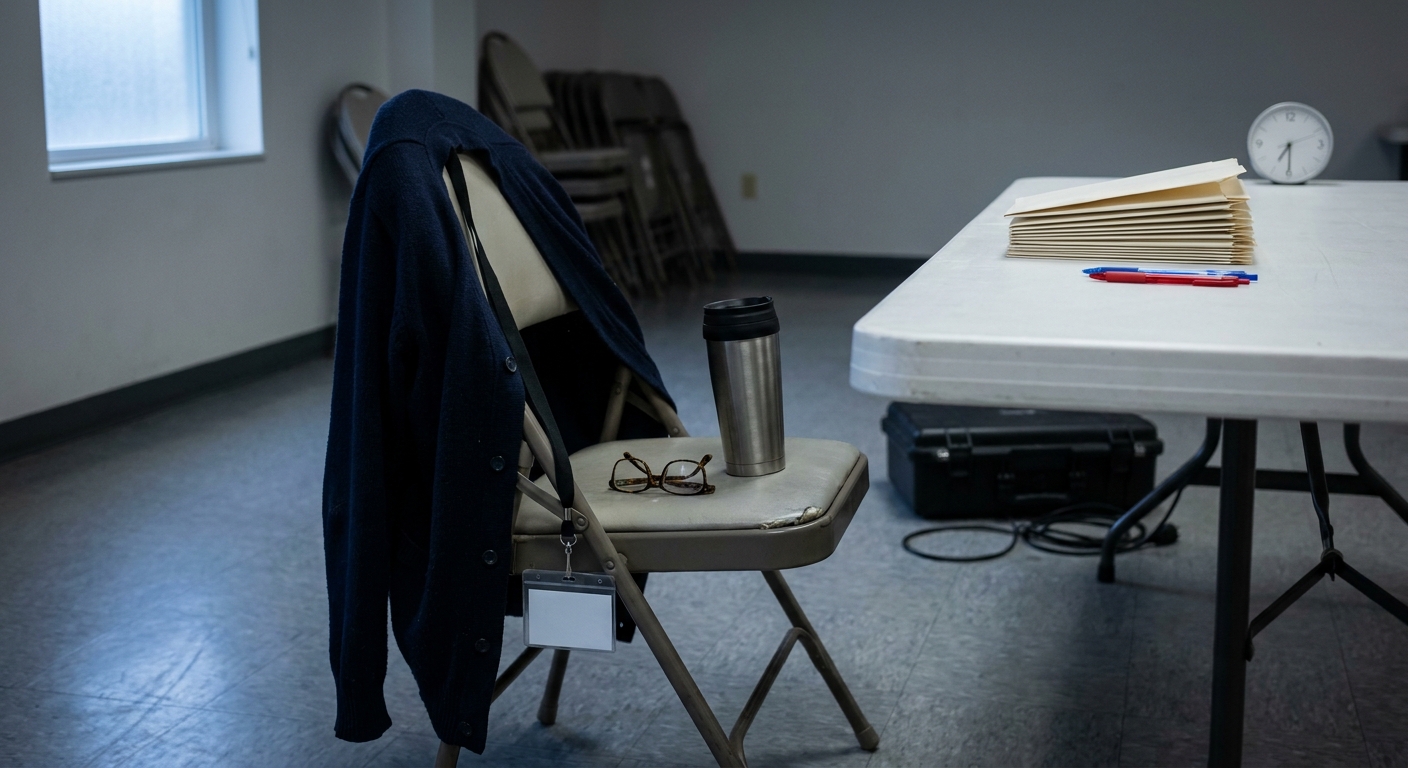
When you walk into the Missouri City Visitors Center to vote this week, the person who checks your name is probably someone you passed at the grocery store. In Fort Bend County, the people running the polls are not strangers shipped in for the day — they are neighbors who finished a county training class, showed up before the doors opened, and will stay until the last vote is counted.
Across the county line, Allison DeLoach of Harris County has seen the same civic rhythm from inside the polling place. A poll watcher and clerk, DeLoach said she signed up out of curiosity about politics and found the work demanding and reassuring.
“I signed up to be a poll watcher several years ago because I wanted to get more involved with politics and wasn’t sure where to start. I loved it! It made me feel so connected to the process and want to get more involved. After that, I became a clerk. It’s long hours, but very rewarding,” DeLoach said. “I would note that I’ve seen a lot as a poll watcher at the 6th busiest voting location in Harris County, particularly electioneering. I’ve been there when a judge was threatened with a gun, when we’ve had bad actor poll watchers, and medical emergencies in the polling location. But seeing how the judges, clerks, and Harris County reacted and responded gave me a lot of faith in our local elections.”
She added: “It gives you incredible insight into the security of our elections. There are checks and balances to everything. The judges and clerks are evenly mixed between both parties. If there’s an issue with a voter, tech problems or misconduct, there is immediate support from the county. There’s oversight throughout the process, and for the most part, the people working just want a smooth, fair voting process.”
Early voting for the November 3 general election runs October 19 through October 30 at 35 locations across Fort Bend County, generally from 7 a.m. to 7 p.m., and any registered county voter may cast a ballot at any of them. In Missouri City, that means the Missouri City Visitors Center, Pinnacle Senior Center, Sienna Annex, Hightower High School, and the Quail Valley Fund Office. Anyone still in line at 7 p.m. casts a ballot.
The clerks and judges at those five sites are working neighbors. A poll watcher is not someone who walks in off the street: a candidate, a political party, or a specific-purpose political action committee appoints them, and before serving they complete state training, show their training and appointment certificates, take an oath not to disrupt the process or harass voters, and wear a badge. Once inside, they watch and flag anything unusual to the election officers — but they may not interfere. Fort Bend County Republican Party chair Greg Barnes has described watchers as observers who help ensure procedures are followed and identify anything unusual, and in a September 3 forecast he estimated the county may need roughly 100 to 200 of them, including during early voting.
An hour before the doors open
Workers report between about 6:00 and 6:30 a.m. to set up the equipment every site uses and go through opening procedures, and they stay until polls close and results are called in or transported to Election Central. Every judge, alternate judge, and clerk must complete county-provided training before serving, including a roughly three-hour class covering setup, basic paperwork, voter identification compliance, and provisional ballots. Workers are paid for that training once they complete at least one day of an election assignment.
Why both parties are in the room
At every site, the presiding judge comes from the party whose candidate for governor carried Fort Bend County in the most recent gubernatorial election, and the alternate judge comes from the party whose candidate finished second. For November general elections, clerks are selected from different political parties where possible, so no single party controls a polling place.
That balance is maintained in the open. At the September 9 Fort Bend County Elections Commission meeting, Democratic Party chairwoman Dr. Jennifer Cantu and Republican Party chair Greg Barnes were both present, and the commission discussed polling-place balance, statutory compliance, and enforcement of the 100-foot electioneering boundary.
When something goes wrong, there's a number to call
Fort Bend County Elections Administration keeps a direct line for voters and poll workers at 281-341-8670, with email at [email protected]. Election judges are instructed to call that number for equipment or supply issues.
That backup is built before the first machine is plugged in. Chase Wilson is the county's elections administrator, and ahead of early voting the county had updated registration records, tested equipment, and reviewed procedures. Its voting-system vendor added a safeguard to prevent incorrect pollbook files from being uploaded, and the department added senior-administration oversight after a May primary-runoff pollbook check-in failure.
The staff is already in place
As of early October 2026, Fort Bend County was no longer accepting new poll-worker applications — the slots for this election were filled. An Election Day precinct generally needs at least three workers: a presiding judge, an alternate judge, and a clerk.
The worker checking a voter's name at any of those Missouri City sites has finished the training, shown up before the doors opened, and is staying until the last ballot is counted.